Core Languages
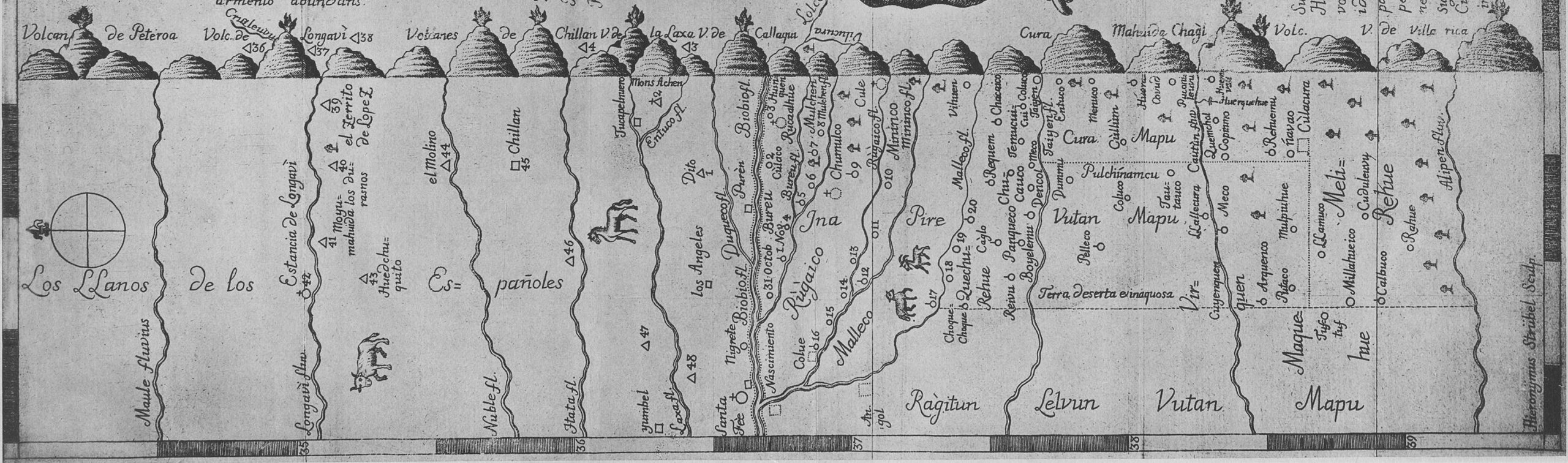
The main focus of the project are the Southern Cone 'Proper' languages, which lie outside the Gran Chaco cultural-linguistic area. This encompasses Patagonia and Tierra del Fuego, as well as the costal archipelagos of the Pacific and the southern Andean regions, all of which share:
(a) a lack of substantial linguistic connections to
the Central Andean and Amazonian periphery and
(b) a restriction on the size of local language families, including
an abundance of isolates.
While local genetic relations are a matter of some debate –which this project aims to
shed light on–, we take as an initial state-of-the-art the classifications in Campbell (2024) and Viegas Barros (2005). We only disagree in their treatment of Mapudungun as a small family, where we argue it is an isolate, with its southernmost variety, Williche, considered a heavily-threatened dialect, rather than a distinct language.
In this admittedly rough view, the preliminary focus is on 9 top-level language families/isolates and 16 individual languages. We note that, excluding Mapudungun and Kawésqar, all other languages in the region are currently dormant (lacking native speakers). Nevertheless, in most cases there are communities with strong heritage links to the languages, which we will attempt to engage with.
The degree to which the available texts will be fully digitised and tagged for each language will be dependant on the amount of available material and previous work on the different varieties.
Gran Chaco 'buffer zone' languages
Our understanding of the areal typology of these languages will crucially be contrasted with data from languages from the Chaco ‘buffer zone’. For this data, the languages and texts are chosen less with the objective of full coverage, but rather with the intention of providing a denser sampling of the transitional area, relying not only on evidence from the best-represented or most-widespread varieties, but on that which fills geographical and temporal gaps.
We thus focus on under-represented languages and earlier historical materials, specifically. This does not mean that, in our typological and historical analyses, we will discount the better-attested Chaco, Amazonian or Andean languages, but simply that these are in less dire need of the kinds of data-access and analysis procedures that characterise CHiCo-SC, their data being more readily available.
Again, following Campbell’s (2024) classification, the Greater Chaco languages for which we will include data in the corpus include 5 top-level families and 14 individual languages.